
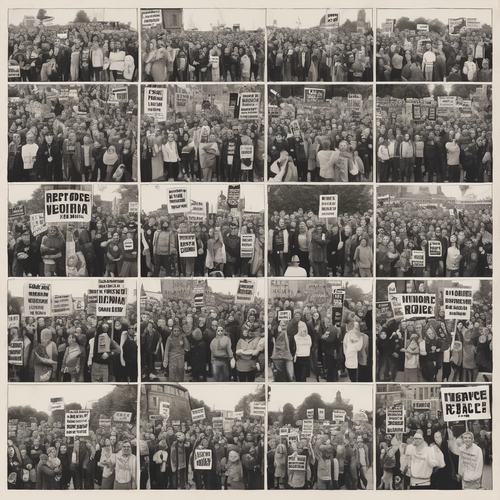

British Neo-Nazis Discussed Targeting Migrants, Mosques, and Synagogues ⚠️🕊️
In a chilling echo of bygone eras, reports have surfaced revealing that British neo-Nazis are openly strategizing on targeting migrants, mosques, and synagogues. This is not merely a spirited debate over ideological differences; it’s a harbinger of escalating violence and a stark reflection of a society wrestling with its darker impulses. How did we find ourselves here, and what does this mean for the fabric of British society? ❓
The Gathering Storm
As if plucked from one of those cautionary tales written long ago, the discussions among these neo-Nazi factions mirror scenes from a dystopian fiction where ‘the others’—migrants, Muslims, Jews—are cast as existential threats to a so-called pure society. This striking antithesis between inclusivity and exclusion reveals a battle not just for the streets but for the very soul of a nation.
In a world where slogans like “Get Britain Back” flutter like flags on beleaguered battlefields, it becomes clear that the enemies are rarely identifiable on the basis of logic. Rather, they emerge from a cauldron of discontent, fueled by a confluence of economic challenges, political missteps, and a predilection for scapegoating the vulnerable. Ironically, the reality in which these neo-Nazis thrive is one of their own making—every desperate upheaval is a reflection of social failings, not simply the presence of diversity.
Ironic Ideologies in Digital Shadows
Gatherings of such ideologies have moved from the back alleys and dimly lit basements into the vibrant yet shadowy platforms of the Internet. Here, the language becomes a weapon, cloaked not just in disdain but also in an unsettling sense of camaraderie. It is as if they find a comfort mirrored only by the solemnity that the heroes of history sought in revolution. But history, more than any grandstanding rhetoric, has a penchant for irony: hope rising as a phoenix from the ashes, while hatred festers beneath.
Consider the juxtaposition of young individuals, hungry for belonging and unity, drawn into circles where bigotry masquerades as community. The allure is reminiscent of an addictive substance—intoxicating yet corrosive, promising clarity while delivering chaos. How easily is ‘us versus them’ spun into the yarn of life, yet forgotten is the simple notion that communities thrive through diversity. 🌀
The Human Element: Personal Stories from the Edge
The lure of hate is often painted in broad, brutish strokes that ignore the complexities of human experiences. Dive beneath the surface to find men and women who spoke, not of malice, but of identity. Take Sarah, a young woman raised in a community layered in prejudice, who found comfort in the validation of extremist beliefs, viewing the world through a kaleidoscope tinted with hysteria. Is there room for understanding where fear has taken hold? Can empathy pierce the iron veil of hate? 💔
And then there’s Ahmed, a migrant who experiences the weight of prejudice not as a distant concept but as a daily reality. His home is a sanctuary, yet often it feels like a fortress under siege, trapped in a narrative spun by those seeking division. Stories like these punctuate the evil that is discussed; the struggle for identity and acceptance resonating within a backdrop of escalating vitriol.
Confronting the Malady
The question gnaws at the edges of public consciousness: what can we, as a society, do to counteract these murmurs of hate that threaten to escalate? It becomes abundantly clear that complacency is not an option. In a world where dreams are painted in broad strokes of racism, combating such ideologies requires meticulous efforts, akin to untangling a web spun by a crafty spider.
- Education: Begin with informing communities about the fallacies of hate. Equip individuals with knowledge, for ignorance is the breeding ground of extremism.
- Dialogue: Engage in open discussions that foster empathy and understanding. We must create spaces where stories can be shared, shifting the narrative from “us versus them” to “we.”
- Community Action: Encourage grassroots movements that advocate for tolerance and inclusivity. Each act of unity becomes a thread restoring the frayed fabric of common humanity.
- Policy Change: Legal action against hate crimes must be taken seriously. Representation in government and law enforcement can create pathways for change.
Through these actions, we can perhaps quench the rising tide of resentment that currently staggers British society. Yet, as each layer is peeled back, the core remains rooted in our collective capacity for compassion.
The Path Ahead
The discussions among British neo-Nazis reveal difficult truths about our society—a stark reminder of the battles still to be fought. But within the darkness, there lies an opportunity to illuminate the path towards unity. Will we let fear dictate our choices, or will we choose understanding as our weapon against the tide of hate? The choice lies with us, shaped by our responses and resolve. The clock is ticking, and the urgency for action has never been greater. ⏳
Only by confronting these challenges head-on, armed with a vision that embraces diversity rather than shunning it, can we hope to forge a future that reflects our highest ideals. In a world where ironies abound, let us be the architects of a narrative steeped in acceptance, forging bonds that outshine the shadows of hatred 🤝.


