
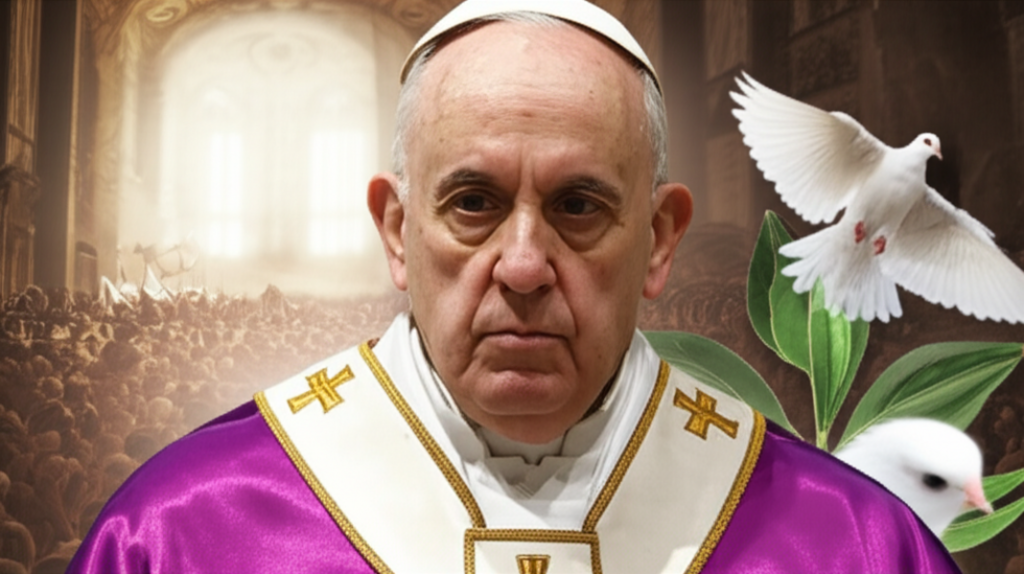

Pope Leo Rebukes a Spreading Global ‘Zeal for War’ 🕊️⚔️
In a world teetering on the fragile edge of peace, it is striking—almost paradoxical—that Pope Leo XIII’s solemn rebuke against a widespread “zeal for war” still pierces the thick fog of contemporary geopolitics with uncanny resonance. The pontiff’s words echo less like a distant relic from papal archives and more like a reflection staring uncomfortably back from the mirror of today’s headlines. Could it be that humanity’s march towards conflict has accelerants shrouded in the very ideals that once promised progress? Or, to put it another way: when did the eagerness to wage war become the global pastime, outpacing even the pursuit of peace?
When Warmongering Becomes a Fever: The Irony of Modern Zeal
Pope Leo’s admonition is a subtle sting wrapped in solemnity—a reminder that enthusiasm for war is an insidious contagion. History often showcases war as the great equalizer, yet the irony is thick: it unites no one, save the arms manufacturers and politicians eager to fan the flames of discord. The world stands witness to a baffling antithesis—a collective drive toward destruction under the banner of protection and defense. One could almost imagine a theater where swords are wielded in the name of peace, a tragically comic juxtaposition where the eagerness to obliterate neighbors is dressed up as laudable patriotism. Does this not sound like an epic tragedy disguised as farce?
Back in the late 19th century, Pope Leo XIII observed with visionary alarm that “the thirst for war” risked engulfing nations like a wildfire, unchecked yet tributary to human folly. The bard would say such zeal is “fiery yet fruitless,” like harvesting storm clouds. Today, this restlessness has morphed into a global drumbeat, an aggressive simmer beneath diplomatic gestures and summit handshakes. But beneath the veneer of political rhetoric lies the sobering truth: a zeal for conflict that festers like an unseen storm, cracking the fragile bones of international stability.
From Banner to Battlefield: A Clash of Values Across Time
Pope Leo’s exhortations emerge from a time of iron empires and shifting alliances, a world breathless from industrial revolutions and colonial ambitions. Fast forward to today: the era of cyber warfare, drone strikes, and proxy battles. The antithesis is glaring. The weapons of old—swords, muskets, cannons—have been replaced by missiles and algorithms, yet the human folly remains stubbornly familiar. Peace, once a fragile flower in war’s vast desert, is now often treated as an inconvenient footnote.
One cannot help but wonder if the zeal for war is less a new phenomenon and more the latest chapter in a perennial human dilemma: the struggle between the desire to build and the urge to destroy. Like a volcano that simmers quietly before a sudden blaze, civilizations can teeter dangerously close to eruption. And when the powder keg ignites, the fallout is measured not just in lost lives, but in the erosion of our collective soul.
Decoding the ‘Zeal for War’: A Psychological and Sociopolitical Lens
What fuels this zeal? Is it tribal instinct, provoked by fear and uncertainty? Or is it the unyielding hunger for power veiled under layers of nationalism and self-preservation? Some scholars propose war fever is less about patriotic duty and more about what psychologist Jonathan Haidt might call moral emotions—rage redirected and sanctified as honor. In this way, zeal becomes an intoxicant, as addictive and ruinous as any elixir brewed in dark halls of power.
Even more perplexing is the seductive language of inevitability that surrounds contemporary conflicts—a narrative where “war is a last resort,” yet preparation for it dominates budgets, headlines, and diplomacy. The result? An almost irresistible temptation to justify hostilities as necessary, a self-fulfilling prophecy that morphs peace into a prologue to the next conflict.
“The zeal for war is like a wildfire in the heart of man, consuming both the forest and the fireman alike.”
Hope Wears the Cloak of Resistance
Yet, if history teaches us anything, it is the resilience of peace advocates. Like a dandelion — stubborn and unyielding — springing through cracked concrete, voices calling for dialogue and understanding push against the roar of drums. Pope Leo’s rebuke is not merely a lament but a clarion call—an invitation to reconsider the cost of our zeal and the value of restraint.
In this light, peace is not a passive absence of war but an active—sometimes arduous—pursuit. It demands courage, humility, and the willingness to confront uncomfortable truths about ourselves and the systems we uphold. The pope’s message, though centuries old, pulses with urgency today: to resist the easy allure of conflict and embrace the harder road of reconciliation.
After all, if zeal for war is a fever, peace must be the cooling balm, the gentle balm that slips unseen, but slowly mends the ruptured heart of humanity. Will today’s leaders heed this sacred reprimand, or will they march on, feet firmly bound to the drumbeat of destruction? Perhaps the future hinges on this question—one that invites reflection, compassion, and, above all, the extraordinary audacity to choose peace.
In a world where swords wield promises of protection and cannons drum paeans of freedom, Pope Leo’s timeless rebuke rings true: let not the zeal for war drown out the quiet wisdom that peace demands. For history teaches us through smoke and ash that every war zealously sought is, in the end, peace reneged and humanity betrayed. ✝️🌍✌️