

“`html
Earthquake in Philippines Kills at Least 6: A Tragedy in Perspective 🌏😢
In the wake of the devastating earthquake that shook the Philippines, claiming at least six lives, one can’t help but ponder the irony of nature’s relentless power. As communities reel from the impact, the juxtaposition of despair and resilience faces us—much like the nation itself, which stands resilient yet vulnerable, a modern-day Sisyphus eternally pushing against the boulders of calamity. How does one navigate such seismic shifts in existence, where the ground itself seems to conspire against peace? ⚡️
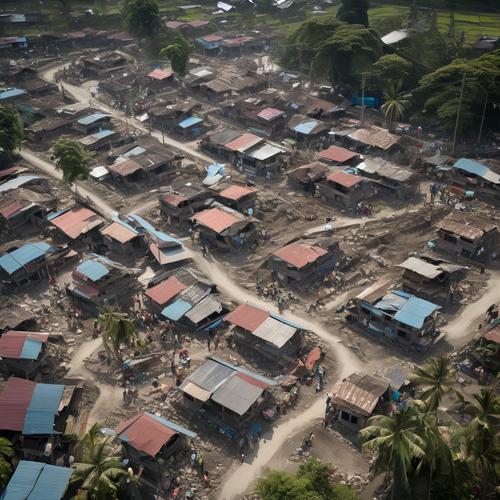
The tremors, reported to have struck in the early hours of a typical day, remind us that in a world striving for progress, nature remains an unpredictable antagonist. Residents experienced a sudden awakening that turned homes into ruins and dreams into dust. The reported fatalities, while startling, only scratch the surface of the broader calamity, echoing through families, businesses, and entire neighborhoods. The antithesis of safety and chaos forms a stark backdrop against which this tragedy unfolds.
Nature’s Unyielding Might
The Philippines is no stranger to natural disasters; its geological location places it on the Pacific Ring of Fire, a volatile area prone to earthquakes and typhoons. Yet, how is it that a nation so accustomed to the whims of Mother Earth can still be caught off guard? One might think of it as a cruel joke, where familiarity breeds not wisdom, but complacency.
The magnitude of the earthquake was measured at 6.1, a figure that carries with it the weight of destruction. It was not just a number; it was a harbinger of loss, as families hurried to evacuate even as they clung to the memories of their lives before the tremors. Thousands were left without power and infrastructure dashed to pieces like fragile glass, raising questions of preparedness. Surely, the resilience of a culture can only be tested so much before it begins to erode. 🏚️
Communities in Crisis
As news reports cycle through images of debris and sorrow, one wonders about the silent stories hidden beneath the rubble—lives interrupted, futures rewritten. Each individual affected embodies not merely statistics but human experiences rich with hopes and aspirations. Consider for a moment the student whose dreams of graduation now hang precariously between the past and future. The striking antithesis between childhood joy and the burden of survival weighs heavily. How do you rebuild when your foundations have quite literally crumbled? 🏫
Emergency services are mobilizing, but their efforts often reveal a tapestry of struggles faced in the aftermath of disasters: scars left on the psyche, infrastructure needing swift repairs, and the haunting specter of loss lingering in the air. With public health systems already stretched thin, the potential for a secondary crisis looms—a cruel irony, that as the earth shakes, so too do the pillars of modern humanitarian efforts. 🚑
The Path Forward: Resilience and Preparation
The Philippines has a history of overcoming adversity, and in such times, communities band together with an unyielding spirit. Local governments, NGOs, and international partners will once again mobilize for support and recovery. Yet, the challenge remains: as the dust settles, how can residents rebuild their lives while safeguarding against the next inevitable catastrophe?
Could it be possible that amidst the rubble of existence lies an opportunity for resilience? Just as ancient myths tell stories of rebirth from ashes, so too might this earthquake propel community leaders to advocate for stronger infrastructure and more robust disaster preparedness measures. It’s a striking paradox that the chaos of the earth’s fury might inspire harmony in planning.
Lessons from the Ruins
The immediate need for relief, shelter, and health services can’t overshadow the essential dialogue about long-term resilience strategies. Historically, nations have risen from disasters, often equipped with new protocols and better systems. From deploying early warning systems to retrofitting buildings, many possibilities lie ahead, planting seeds of hope. 🌱
This earthquake is a sobering reminder of our vulnerability. It compels us to ask, how can humanity both respect and prepare for the epic forces of nature? For the families affected, may this tragedy illuminate pathways toward recovery, as they embrace their narratives not just as victims of a disaster but as resilient individuals who will rise again, more united than ever. 🤝
In the wake of tragedy, community resilience has always emerged as a cornerstone of recovery. It’s not merely about rebuilding structures but fortifying the bonds between those who share both grief and renewal. As the echoes of the earthquake fade, let this be a call to action for improved safety and a testament to the unbreakable human spirit. The path forward requires collaboration, preparation, and above all, a recognition of our shared vulnerability amidst nature’s indifference.
“`


